Gerald P. Boersma
Professor of Theology • Ave Maria University
Gerald P. Boersma is Chair and Professor of Theology at Ave Maria University. A Catholic systematic theologian, his scholarship focuses especially on the thought of St. Augustine and St. Thomas Aquinas. He is author of Affective Knowledge in the Theology of Thomas Aquinas (Cambridge, 2026) and Augustine’s Early Theology of Image (Oxford, 2016). He has written numerous articles in theology, philosophy, and literary criticism. He has held fellowships at Villanova University, the University of Tübingen, and the University of Oxford. A sought-after speaker, Prof. Boersma frequently offers talks to retreats, parish events, student gatherings, and academic conferences.

Marginalia
Provisional reflections, works in progress, and ideas over which I’m currently musing


Books
Scholarship on the theology of image, vision, and the knowledge of God.

Affective Knowledge in the Theology of Thomas Aquinas
Cambridge University Press · 2026
According to the standard Thomistic account, God can be known both by nature and revelation. The first is the terrain of metaphysics, which knows God as the cause of his created effects. The second is theology, which knows God through the words in which he has revealed himself. Often neglected, however, is a third way that Aquinas maintains God can be known. Affective knowledge, which proceeds by way of intuition, experience, and union, is fundamental to Aquinas's theological method. The central claim of this book is that, for Aquinas, the new life of grace given in baptism also entails a new affective, connatural knowledge of the things of God. This "loving knowledge," which finds its consummation in beatific knowing, reverberates throughout Aquinas's theological epistemology, underwriting his account of the doctrine of gifts of the Holy Spirit, divine indwelling, the spiritual senses, and theological contemplation.
FORTHCOMING · CAMBRINDGE · 2026

OXFORD UNIVERSITY PRESS · 2016
Augustine's Early Theology of Image
A Study in the Development of Pro-Nicene Theology
This study examines Augustine's understanding of the imago Dei and argues that it marks a striking departure from earlier Latin pro-Nicene theology. Where his predecessors — Hilary of Poitiers, Marius Victorinus, and Ambrose of Milan — treated the divine image chiefly as a Christological category signifying unity of substance, Augustine, drawing on Platonic and participatory frameworks, extends the image to both Christ and the human person: Christ as an image of equal likeness, the human person as an image of unequal likeness. Tracing this development from Augustine's earliest writings toward De Trinitate, Boersma shows how a distinctively Augustinian theology of the image first took shape.
Media and Lectures
Courses, lectures, interviews, and video appearances.
The Life and Teachings of St. Augustine Trailer | The Pursuit of Wisdom
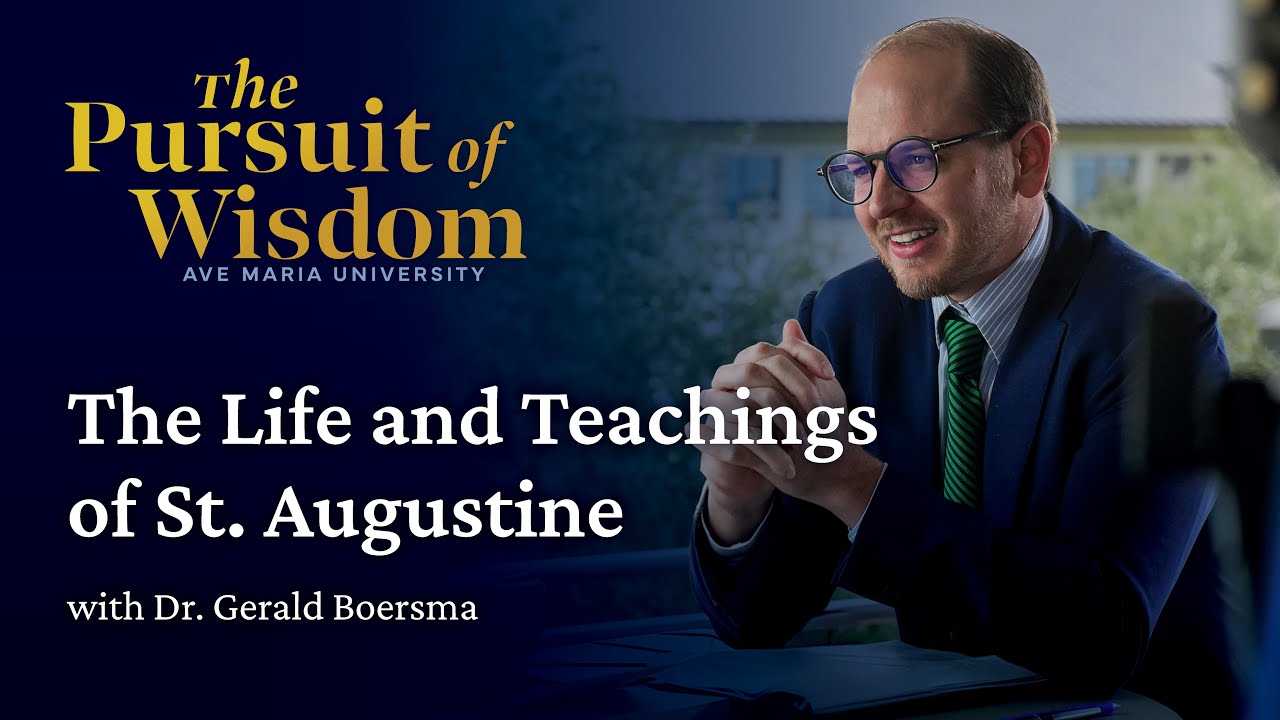
The Life and Teachings of St. Augustine Trailer | The Pursuit of Wisdom

Augustine's Teaching on Grace w/ Dr. Gerald Boersma | Ep. 39

Lenten Quiet Day 2025 - Session 3

Lenten Quiet Day 2025 - Session 2
Coming Up: Aquinas Conference


Articles
Augustine & Patristic Theology
Aquinas
Literature and Theology
AMERICAN ACADEMY OF CATHOLIC SCHOLARS AND ARTISTS
Prof. Boersma serves as Director of The Academy.
The Academy is an honorary society representing America’s preeminent Catholic intellectuals and artisans. The Academy (American Academy of Catholic Scholars and Artists) aims to promote the advancement of the Catholic intellectual and artistic patrimony under the motto of Quecumque sunt Vera.
Ordinary Academicians are forty in number and are representative of the nation’s most outstanding theologians and philosophers; jurists and social scientists; architects and artists; poets and composers.
The Academy also sponsors external initiatives for Catholic university students and young professionals. By means of mentorship opportunities, writing retreat workshops, and studio-art classes, The Academy aims to develop a generation of Catholic leaders who are uncompromising in their commitment to intellectual and artistic excellence.
Click below to view the Academy's website:
